How to Start a Used Car Dealership in Arizona: ADOT MVD Dealer Licence and Bond
How to Start a Used Car Dealership in Arizona: ADOT MVD Dealer License and Bond
If you want to sell used vehicles in Arizona, the arizona used car dealer license is the center of the project. The Arizona Department of Transportation Motor Vehicle Division (ADOT MVD) issues dealer licenses under A.R.S. 28-4361 to 28-4366, and a used dealer must post a $100,000 surety bond. Around that license you also need a registered business entity, a Transaction Privilege Tax (TPT) license from the Arizona Department of Revenue, and a lot that ADOT inspects before it approves you.
This guide follows the order that tends to work best. Each step names the agency, the fee where one is published, and the point where applicants most often get stuck.
Disclaimer: This article is informational content, not legal or tax advice. Fees, forms and processing times change. Confirm every figure with the agency named before you commit money. For complex situations, including choosing an entity, buying or leasing a lot, or dealing with a past criminal record, talk with a qualified attorney or CPA.
Materials and information you need before you start
- Formation documents for your business entity: Articles of Organization for an LLC or Articles of Incorporation for a corporation
- A business name that meets Arizona naming rules, plus a name reservation if you need time to file
- A TPT license, or at least a completed application for one, with a copy you can submit with your dealer application
- A lot or part of a lot that qualifies as an established place of business
- A $100,000 surety bond from a surety company, filed for each county where you will do business
- Fingerprints for every owner holding 20 percent or more of the business
- Proof that you completed the education and training ADOT prescribes for used dealers
- Your city's business license or zoning approval, where your city requires one
- Payment for the ADOT application fee, the annual license fee and any branch fees
Step 1: Form your business entity and reserve your name
Most dealers form an LLC or a corporation first to separate the business from personal assets. The Arizona Corporation Commission handles entity filings through the Corporations Division. The Secretary of State handles trade names, which are covered in Step 2.
For an LLC, you file Articles of Organization (Form L010) with the Corporation Commission. The filing fee is $50. Expedited review costs $35 more, or $85 total. Accelerated service is added on top of the filing fee: $100 for next day service (received by 5pm), $200 for same day service (received by 10am) or $400 for two hour service (available 8am to 3pm). Accelerated service guarantees examination within the stated window, not approval. The Corporations Division processing times sheet, posted as of December 29, 2025, showed about 9 to 11 business days for regular processing and 2 to 4 business days for expedited processing. Check the current sheet before you plan around those numbers.
Your entity name must follow A.R.S. 29-3112. An LLC name must contain 'limited liability company' or 'limited company', or one of the abbreviations L.L.C., L.C., LLC or LC. It cannot contain 'association', 'corporation', 'incorporated' or an abbreviation of those words, and it must be distinguishable from names already on the record. Names with banking or trust terms need prior written approval from the Arizona Department of Financial Institutions, which can add weeks you did not plan for. Search existing names at the Arizona Business Center business search before you settle on a name. A name reservation costs $10 and holds the name for 120 days.
If you form a corporation instead, the Articles of Incorporation fee is $60 and must be filed with a Certificate of Disclosure. For-profit corporations must file an annual report each year in their anniversary month, at $45 per report. A corporation may request a written extension of up to six months, filed on or before the due date. Arizona LLCs file no annual report, so this is the biggest recurring state filing difference between the two structures. Filings are made through the Arizona Business Center, and general information is at azcc.gov/corporations.
Every entity needs a statutory agent, which is Arizona's term for a registered agent. An individual agent must be a permanent, full-time Arizona resident with a permanent, full-time Arizona physical or street address. An entity can serve as agent if it is authorized to transact business in Arizona, but an LLC cannot be its own statutory agent. The agent must accept the appointment in writing on Form M002. Changing the statutory agent or principal address costs $5 for an LLC. An LLC must also publish notice unless its statutory agent's county is Maricopa or Pima, so confirm the publication step for your county before you file.
Step 2: Register a trade name if you will use one
If your lot will operate under a name other than the legal name of your entity, you can register that name as a trade name with the Arizona Secretary of State, Business Services Division. Trade name registration is optional in Arizona and is separate from the Corporation Commission filing. Check the current fee and procedure at azsos.gov/business/tntm. Use the same legal and trade names consistently across your entity filing, TPT license and ADOT application, because a mismatch creates extra paperwork.
Step 3: Secure a qualifying place of business
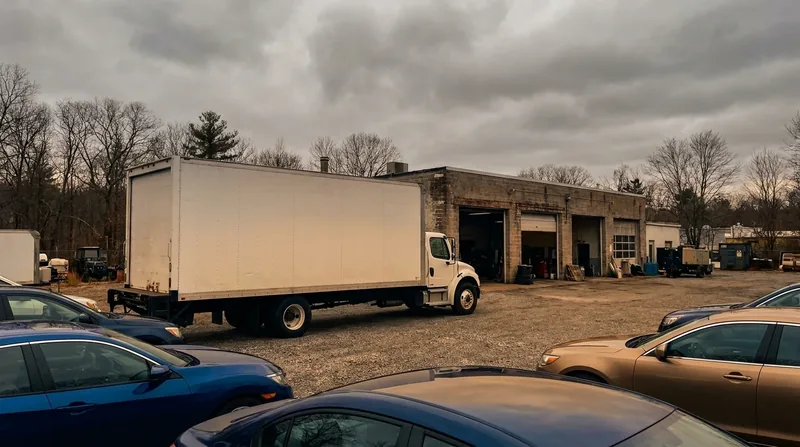
A used dealer must have an established place of business under A.R.S. 28-4301. A lot, or part of a lot, qualifies. A residence, a tent or a temporary stand does not. ADOT inspects the location before it approves the license, so the address on your application must be the place the inspector visits.
Confirm zoning with your city before you sign a lease or purchase agreement. Many lot owners sign first and learn later that the zoning does not allow auto sales at that address. Asking the city before you commit costs nothing and can save you the deposit.
Step 4: Register for a TPT license with the Department of Revenue
The applicant must hold a Transaction Privilege Tax license and supply a copy with the dealer application (A.R.S. 28-4362). The TPT license is issued by the Arizona Department of Revenue at $12 per location. Arizona does not have a general statewide business license. The TPT license is a tax license, and it is the state license most businesses with taxable sales actually need. Apply through the Department of Revenue TPT license page.
Once licensed, you collect and remit TPT on taxable retail sales. The state combined rate is 5.6 percent on retail and most other taxable classifications, and county and city rates apply on top of it. Ask the Department of Revenue how your vehicle sales and any related services are classified before you set your pricing.
Step 5: Check county and city requirements
Counties in Arizona issue no general business license. Cities and towns often require their own business license on top of the state license, and some check zoning for auto sales. Call your city's licensing or clerk's office and ask three questions: whether a city business license is required, what it costs, and whether the zoning at your address permits used car sales. The fee is set by each city, so this guide does not list one.
If you plan to build, grade or improve the lot itself, the Registrar of Contractors licenses contractors. Confirm with the Registrar whether that work needs a contractor license before a builder starts.
Step 6: Buy the $100,000 surety bond
A used dealer must post a surety bond of $100,000 (A.A.C. R17-5-402). Wholesale dealers and brokers post a $25,000 bond. You file the bond for each county where you will do business. The bond is issued by a surety company, and the premium you pay the surety is set by the company, not by the state. Get quotes from two or three surety agents, and confirm the bond form and filing method with ADOT before you buy, since a bond on the wrong form is a common reason for a returned application.
Do not let the bond lapse. ADOT requires it for licensing, so a lapse puts your license at risk. Confirm the continuing requirements with ADOT.
Step 7: Complete ADOT-prescribed education and training
Used and wholesale dealers must complete the education and training ADOT prescribes at initial licensing and again at renewal (A.R.S. 28-4361). Ask ADOT which course is currently prescribed, who may offer it, what it costs, and how completion is reported. Start this early, because you cannot finish the application without proof of completion.
Step 8: Clear the fingerprint and background requirements
Owners holding 20 percent or more of the business provide fingerprints for a criminal records check. ADOT may deny a dealer license for fraud or an auto-related felony in the past 10 years, or for any other felony in the past 5 years (A.R.S. 28-4365). Confirm the current fingerprint procedure and any fee with ADOT. Answer every background question truthfully. If any owner has a record, have an attorney review the situation before you file, since the answer depends on the specific offense and dates.
Step 9: File the ADOT application and pay the fees
The ADOT fees under A.R.S. 28-4302 are a $15 application fee, a $100 annual license fee, a $100 annual continuation fee and $50 per branch. If the dealer has a contract with a third-party lender, the fee is $400, and $250 on continuation. ADOT may delegate dealer licensing to third parties (A.R.S. 28-5101), so confirm with ADOT whether you file directly or through an authorized third party, and whether the lender contract fee applies to your business.
Assemble the package before you submit: entity documents, TPT license copy, bond for each county, education proof, fingerprints for qualifying owners, the application fee and the location details. A missing item usually sends the whole application back, and the fee may not come back with it.
Step 10: Pass the ADOT location inspection
ADOT inspects the location before it approves the license. Before the inspection, walk the lot yourself with your application in hand. Confirm that the address matches, that the site is an established place of business as described in Step 3, and that your records and office are where you said they would be. Be present or have a representative available who knows the business.
Step 11: Keep the license in good standing
Your dealer license renews annually with a $100 continuation fee. Used dealers repeat the ADOT-prescribed education and training at renewal. Keep the surety bond and TPT license current the whole time you operate. Keep a statutory agent with a valid address on record at all times, because an entity without one risks administrative dissolution under A.R.S. 29-3708.
Your tax structure also matters. Arizona's individual income tax is a flat 2.5 percent. An LLC that is taxed as a pass-through passes its income to the members, who pay that rate. A corporation pays the corporate income tax of 4.9 percent of net income or $50, whichever is greater (A.R.S. 43-1111). Ask a CPA which structure fits your plans before you file.
Arizona fee summary
| Item | Amount | Agency or source |
|---|---|---|
| LLC Articles of Organization | $50 ($85 expedited) | Arizona Corporation Commission |
| Accelerated service (added to filing fee) | $100 next day, $200 same day, $400 two hour | Arizona Corporation Commission |
| Corporation Articles of Incorporation | $60 | Arizona Corporation Commission |
| Corporation annual report | $45 per year | Arizona Corporation Commission |
| Name reservation (120 days) | $10 | Arizona Business Center |
| Trade name registration | Confirm current fee | Arizona Secretary of State |
| TPT license (per location) | $12 | Arizona Department of Revenue |
| ADOT dealer application | $15 | ADOT MVD |
| Annual dealer license | $100 | ADOT MVD |
| Annual continuation | $100 | ADOT MVD |
| Each branch | $50 | ADOT MVD |
| With third-party lender contract | $400 initial, $250 continuation | ADOT MVD |
| Used dealer surety bond | $100,000 (premium set by surety) | A.A.C. R17-5-402 |
| Wholesale dealer or broker bond | $25,000 (premium set by surety) | A.A.C. R17-5-402 |
| City business license | Varies, confirm with your city | Your city |
| Fingerprints and education course | Confirm with ADOT | ADOT MVD |
Common mistakes to avoid
- Using a residence or temporary stand as the address. A residence, tent or temporary stand does not qualify under A.R.S. 28-4301.
- Signing a lease before checking zoning. Ask the city first, in writing if you can.
- Filing a bond that does not match the counties. The bond is filed per county where you do business.
- Forgetting the TPT copy. The application needs a copy of your TPT license (A.R.S. 28-4362).
- Assuming a county business license covers you. Counties issue none, and many cities require their own.
- Overlooking the 20 percent owners. Every owner at that level needs fingerprints, not only the person filing.
- Letting the statutory agent lapse. Without a valid agent address, the entity risks administrative dissolution under A.R.S. 29-3708.
- Budgeting for an LLC annual report. Arizona LLCs file none, but corporations pay $45 each year.
Practical tips
- Start the bond quotes and the education enrollment early, since both can hold up the application.
- Search the Arizona Business Center before you pick a name, and reserve it if you need time.
- Ask ADOT in writing which forms, fees and education course apply to your current filing, and keep the answer in your file.
- The Arizona Small Business Development Center Network offers free and low-cost business advising at arizonasbdc.com, which is useful for a first-time owner working through the sequence.
- Have an attorney review the entity choice and the lot lease, and a CPA review the tax structure, before you spend on inventory.
What to expect
Many applicants find that the entity, name and TPT steps move quickly, while the bond, education, background and inspection steps set the real timeline. The LLC filing alone can be completed in roughly 9 to 11 business days under regular processing, according to the posted sheet, but that figure does not include ADOT review, the TPT license, the bond or the inspection. Treat your opening date as something to confirm with ADOT, not something you can set from the state processing times in this guide.
Working through the steps in order usually reduces the back-and-forth. Each stage gives you a document or confirmation that the next stage needs, so a gap at one step is easier to spot before it stalls the rest.
Next steps
Start with the entity and name, then confirm your location with your city, then apply for the TPT license. Get bond quotes and enroll in the ADOT education course while those run. Once you have the bond, the TPT copy and the background clearances, file the ADOT application and prepare for the inspection. The ADOT MVD dealer licensing pages are the place to confirm current forms and procedures before you file.